
Gašper Beguš
Project CETI + UC Berkeley, Dept. of Linguistics — Linguistics, AI, Cognitive Science
Kyle Mahowald
University of Texas at Austin — Linguistics
Jonathan Gilmour
The Impact Project
Jan Eisfeldt
Santa Fe Institute — Trust & Safety
Kate Starbird [↑]
Chair: TBA
Abstract
Details coming soon.
Bio
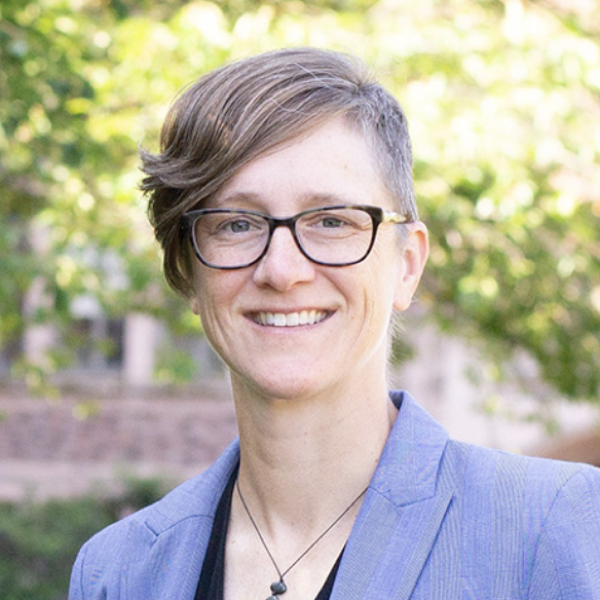
Kate Starbird is a Professor at the Department of Human Centered Design & Engineering (HCDE) at the University of Washington (UW). Kate's research sits within the fields of human-computer interaction (HCI) and computer supported cooperative work (CSCW). Extending from early work in crisis informatics, her research program has followed the phenomenon of online rumoring down the rabbit hole and into some of the toxic online spaces that are increasingly (re)shaping discourse, values, and politics around the world. In particular, Kate's team has developed and deployed methods for conducting rapid research to help resolve rumors as they unfold. Another major contribution of her work has been to demonstrate that online disinformation — i.e. the intentional manipulation of discourse for political gain — is inherently participatory, taking shape through collaborations between witting agents and unwitting (though willing) crowds. Most recently, her research has converged on a conceptualization of right-wing media as effectively leveraging partisan, participatory dynamics through improvisational performances.
Rafael Prieto-Curiel [↑]
Chair: TBA
Abstract
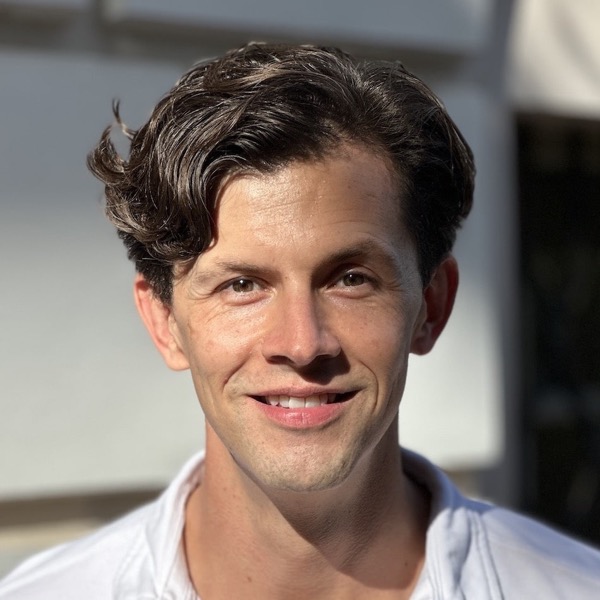
It has now been twenty years since Mexico launched its frontal fight against organized crime. Over these two decades, the country has pursued myriad strategies to combat cartels. Yet these organizations have grown stronger and now exert significant control across many parts of the country and many economic activities. This failure stems partly from our limited understanding of how to address such a complex problem. In this talk, I will present an approach to organized crime based on complex systems. I will show how different dimensions of insecurity have evolved and interacted in ways that have “trapped” the country in sustained cycles of violence. I will also argue that a different strategy, focused on disrupting recruitment, reducing impunity, and promoting rehabilitation, is essential to building a more peaceful country and region.
Bio
Rafael Prieto-Curiel is a Faculty Member at the Complexity Science Hub (CSH), where he joined as a postdoctoral research fellow in May 2022. His work at CSH, as well as his work with OECD and The World Bank Group, focuses on mobility, migration, and urban dynamics.
At CSH, he investigates the dynamics of organised crime alongside patterns of human mobility, migration flows, and urban development, with a focus on demographic trends in African cities. Before that he was at the Mathematical Institute of the University of Oxford/Centre for Advanced Spatial Analysis at University College London, working on urban dynamics at the Peak Urban project. He has a master's degree in statistics and a PhD degree from University College London in maths and security and crime. Rafael was director of strategic analysis at the Emergency Attention Centre of Mexico City where he worked on crime forecasting and police and resources allocation.
Katy Milkman [↑]
Chair: TBA
Abstract
Details coming soon.
Bio
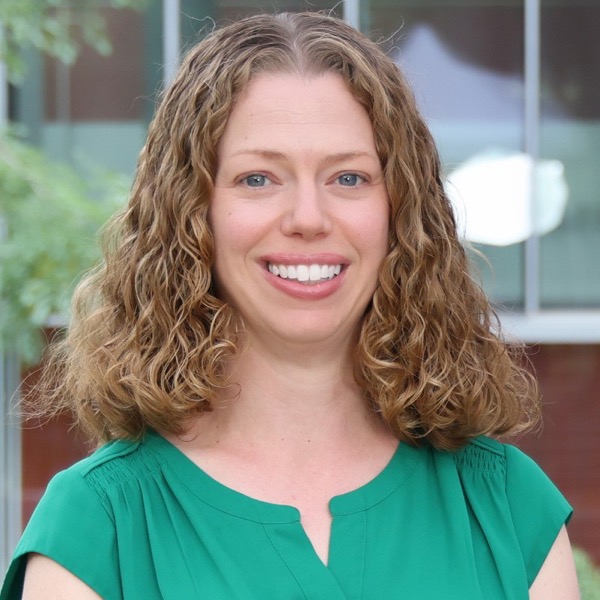
Katy Milkman is best known for her award-winning research on how to identify and overcome barriers that prevent positive behavioral change. Her insights have been applied to topics such as savings, exercise, vaccination uptake, and discrimination.
Milkman is currently the James G. Dinan Professor at The Wharton School of the University of Pennsylvania. In addition to her teaching and research, she is a best-selling author, host of Charles Schwab's popular behavioral economics podcast 'Choiceology', and the former president of the International Society for Judgment and Decision Making. Milkman is also the co-founder and co-director of the Behavior Change for Good Initiative at the Wharton School, a research center with the mission of advancing the science of lasting behavior change.
Abstract
Details coming soon.
Bio
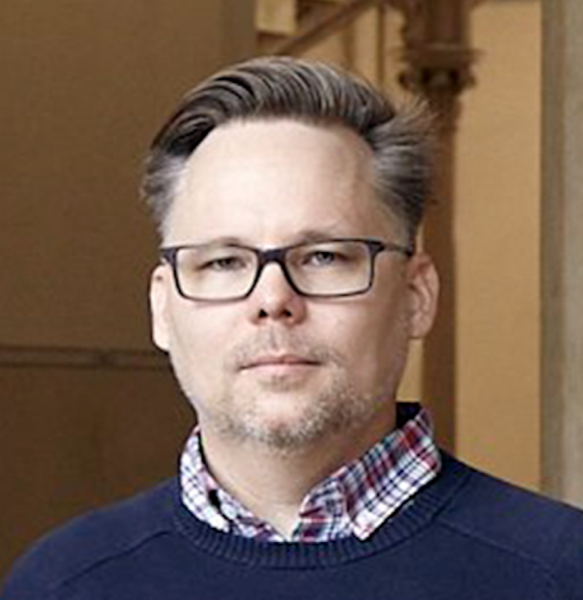
Derek Curry is an artist-researcher and Associate Professor in Art + Design at Northeastern University whose work combines reverse-engineering, social science methods, and critical artmaking to investigate technological power structures.
Together with Jennifer Gradecki, they reverse-engineer socio-technical systems — including dataveillance technologies, online misinformation, and AI-generated disinformation — to make biases and assumptions more legible to the public. Their interactive artworks offer the public a "visceral heuristic" — experiential encounters with systems like surveillance technologies and algorithmic decision-making that make their embedded assumptions and design choices legible to non-experts. See more of their work at: derekcurry.com and jennifergradecki.com.
Abstract
Details coming soon.
Bio
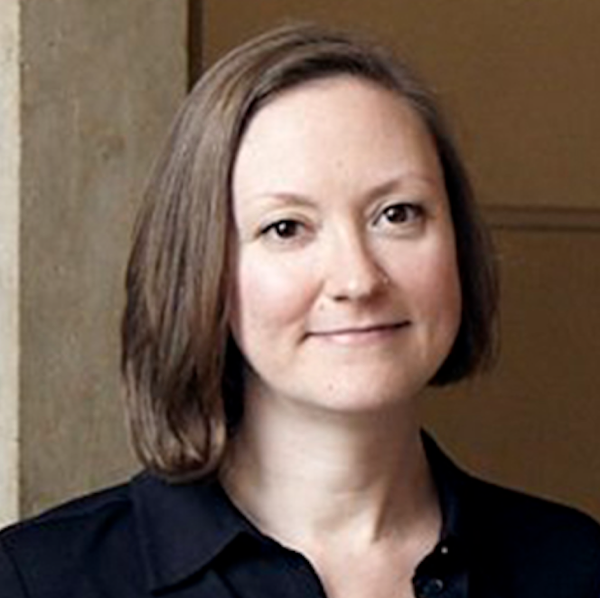
Jennifer Gradecki is an artist and researcher who provides critical counterpoints to dominant techno-solutionist narratives, drawing from tactical media, science and technology studies, and information activism.
Together with Derek Curry, they reverse-engineer socio-technical systems — including dataveillance technologies, online misinformation, and AI-generated disinformation — to make biases and assumptions more legible to the public. Their interactive artworks offer the public a "visceral heuristic" — experiential encounters with systems like surveillance technologies and algorithmic decision-making that make their embedded assumptions and design choices legible to non-experts. See more of their work at: derekcurry.com and jennifergradecki.com.
Abstract
Details coming soon.
Bio
Gašper Beguš is an Associate Professor at the University of California, Berkeley, where he bridges the fields of linguistics, artificial intelligence, and cognitive science. His research centers on interpretable AI and the study of language in humans, animals, and machines. Dr. Beguš leads efforts to develop techniques that help us better understand the inner workings of AI. In his Berkeley Biological and Artificial Language lab, he also builds the most realistic models of human language learning—creating an artificial baby language learner. Serving as the Linguistics Lead at Project CETI, he applies similar tools to the language of whales and recently showed that sperm whales produce sound patterns analogous to human vowels and that orcas have vowels and consonants.
Kyle Mahowald [↑]
Chair: TBA
Abstract
Details coming soon.
Bio
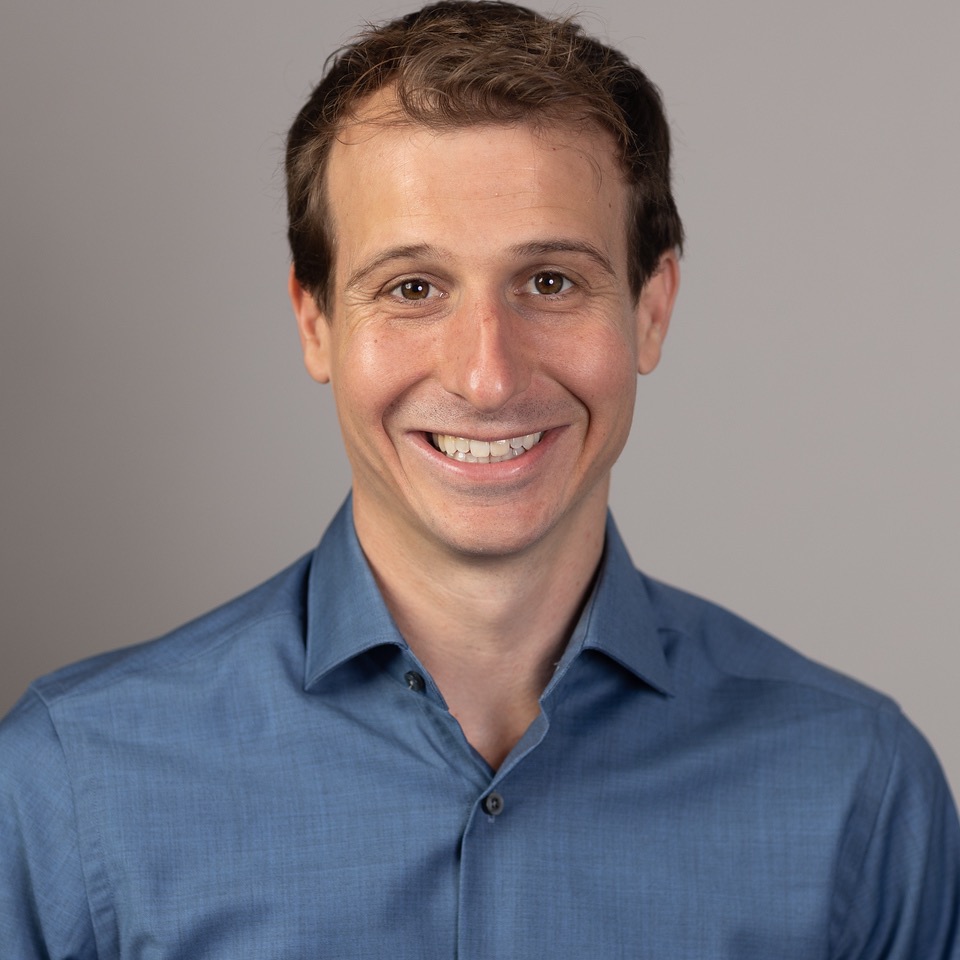
Kyle Mahowald is Assistant Professor of Linguistics (Associate Professor with Tenure from August 2026) at The University of Texas at Austin. His work focuses on computational linguistics and how AI models of language can inform our understanding of human language and thought. He regularly publishes in computational linguistics and cognitive science venues, and his papers have won Outstanding Paper Awards at EMNLP 2023, 2024, and 2025, as well as a Best Paper Award at ACL 2025. He is also the recipient of an NSF CAREER grant. His training is in Cognitive Science (Ph.D., MIT), Linguistics (M.Phil., Oxford), and Natural Language Processing (postdoc, Stanford NLP group).
Jonathan Gilmour [↑]
Chair: TBA
Abstract
I've spent my career working on public data during crises — building a national COVID dataset because no federal one existed, helping preserve federal health and environmental data and tools as they were targeted for deletion, and now mapping how federal policy changes affect communities and how those communities are responding. In this talk I'll make the case that public data is infrastructure, and as such needs our care and maintenance. I'll also talk about three main failure modes: it never gets collected, it gets taken down, or it exists in an inaccessible form. I'll end with what it takes to keep it standing, and how we can all participate in this vital work.
Bio
The Impact Project (TIP) is a nonpartisan data and research platform that provides the tools and insights leaders across government, business, and civil society need to meet the moment and make informed decisions.
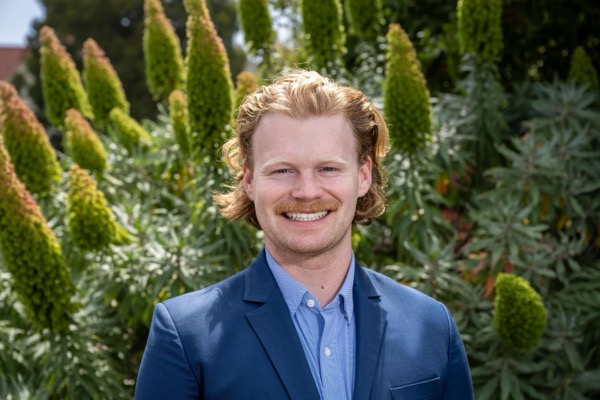
Jonathan Gilmour is a data scientist who specializes in crisis data response. After helping to build The COVID Tracking Project at The Atlantic, Jonathan developed deep expertise in environmental and public health data as an advisor to the Rockefeller Foundation and a data scientist at the Harvard School of Public Health. In 2024, he was a Science and Technology Policy Fellow at the Aspen Policy Academy. He also helped found the Public Environmental Data Partners, where he leads federal data preservation work.
Jan Eisfeldt [↑]
Chair: TBA
Abstract
Details coming soon.
Bio
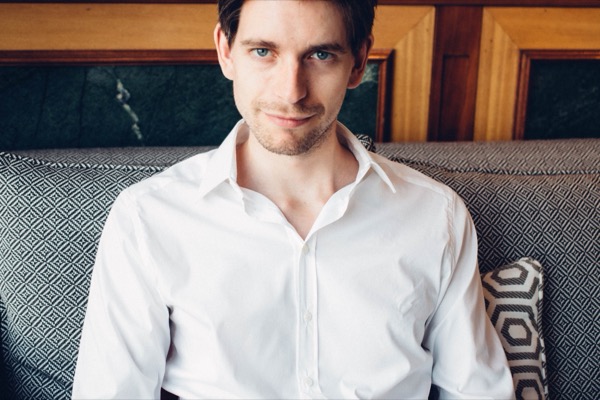
Jan Eißfeldt is an external fellow at the Santa Fe Institute. He is also a working group member of the Trust & Safety Professional Association; an Advisory Board member of Marketplace Risk; and an International Telecommunications Union (ITU) technical standards focus group contributor.